

This week in Nature yet another terrific human genetics paper from my former colleagues at Regeneron Genetics Center (RGC). The authors took a metric that any clinician can read off a standard lipid panel without ordering anything extra, the triglycerides (TG) to high-density lipoprotein (HDL) cholesterol ratio, and ran an exome-wide association study in a million people. The massive sample size enabled them to find a set of individuals carrying extraordinarily rare mutations that gave them a healthy cardiometabolic profile and lower disease risk, pinpointing a pathway that no human geneticist had connected before to energy metabolism.
First about the biomarker
TG and HDL move in opposite directions for a single reason, and it is not lipid handling as some might assume. It is how much room the fat tissue has left for storage.
Insulin instructs the adipose tissue to keep the fat stored and keeps sending fat to adipose tissue for storage. It does so by switching on lipoprotein lipase in the circulation and switching off lipolysis in the adipose tissue. When the storage capacity runs out, insulin fails its task and TG stagnates in blood, CETP trades it into HDL, which dumps it in the liver, sheds its apoA-I, which the kidney clears.
Two consequences: TG rises and HDL falls for the same underlying reason. Hence, the ratio says something that neither individually could.
Before you can use a biomarker as a discovery phenotype, you have to show it measures what you think it measures. The authors did that in two tiers.
Cross-sectionally, a higher TG:HDL ratio tracked fasting insulin, visceral fat, liver fat (on imaging) and steatosis grade on biopsy in bariatric surgery patients, HbA1c, blood pressure and CRP (inflammation). None of these are lipid measurements; all measure fat storage and insulin resistance.
Prospectively, among people free of the outcome at baseline, a higher ratio predicted incident type 2 diabetes (T2D), myocardial infarction, fatty liver disease (MASLD), and liver cirrhosis.
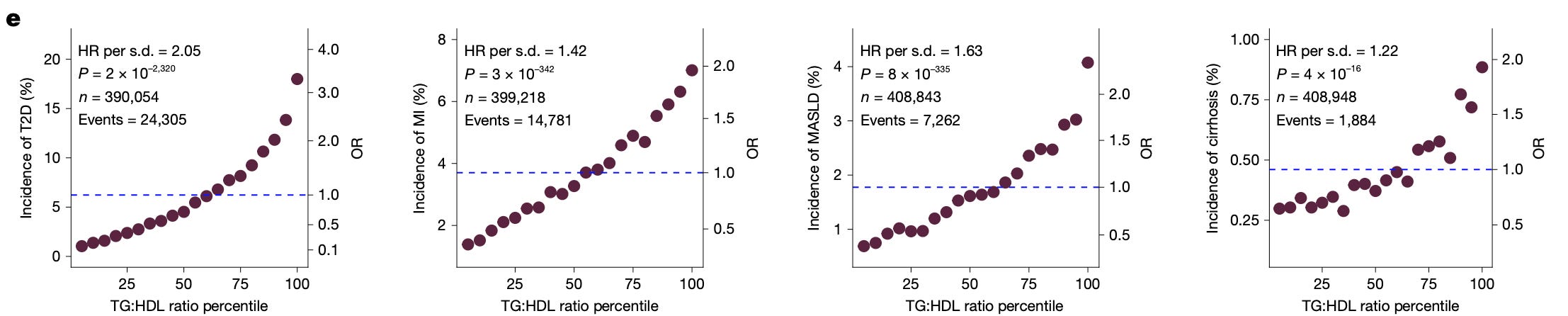
So the number hidden in a routine lipid panel is not reporting about your lipids, but how close your fat storage system is to its limit, years before any disease manifests.
Now to the actual study: the ExWAS in more than a million people, a scale that only RGC can reach.
Collapsing rare variants within individual genes and testing their collective effect on the biomarker, the authors identified 59 genes in which rare coding variants significantly altered the TG:HDL ratio. Not surprisingly, many are what you’d expect: 7 in the LPL pathway, 5 apolipoproteins, 11 monogenic lipid disorder genes, 31 known drug targets of which 23 are already approved or in human trials.
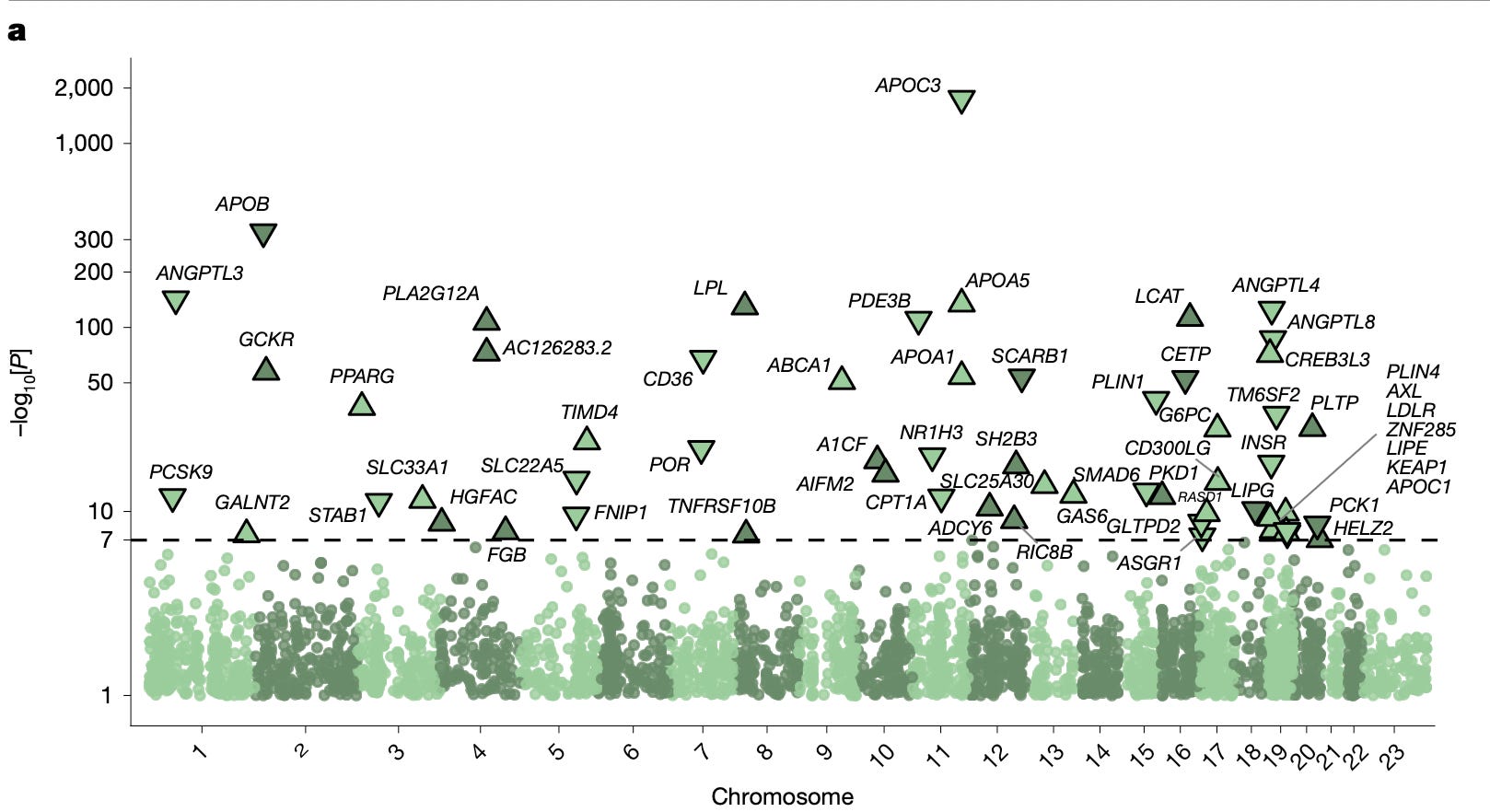
Two results validated the phenotype.
1. Enriched pathways were dominated by lipid and glucose regulation, insulin resistance, lipolysis regulation and fat storage.
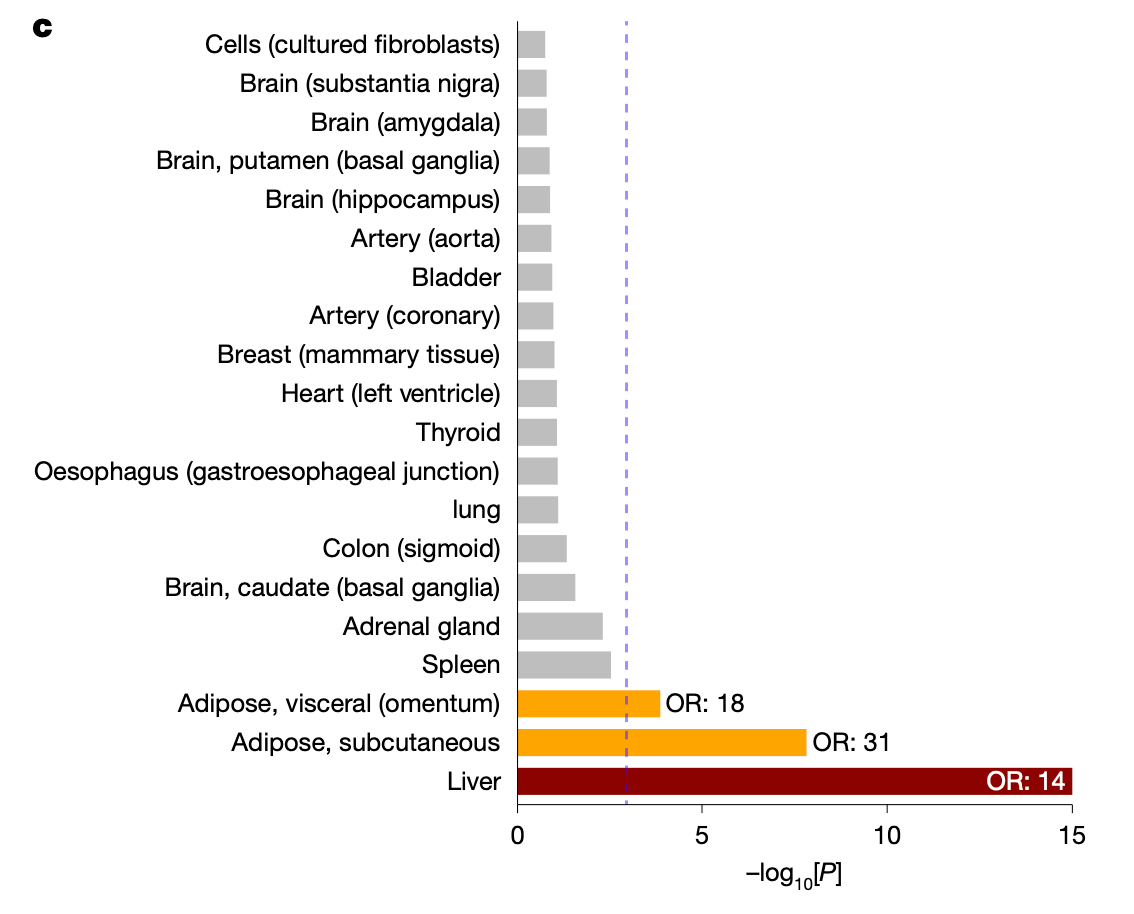
2. Tissue enrichment pointed strikingly at two organs and nothing else: liver at 13.6 fold and adipose tissues, visceral at 18 fold and subcutaneous at 31 fold (!)
Adipose tissue took the spotlight, showing that the genes found are concentrated in the tissue that stores fat, validating what biology the biomarker was expected to measure.
Now we dive into the list, move aside the boring ones and bring the surprising ones to focus.
Cross off what you already knew. Strike the apolipoproteins, strike the LPL pathway and their regulators, strike CETP, LCAT and the rest of the reverse cholesterol transport machinery, strike the monogenic lipid disorder genes, strike PPARG, strike insulin signaling genes. Every one of them is a positive control. None of them is news.
Now about 19 genes stay. Sort them by effect sizes and one stands out clearly: FNIP1 at an effect size of ~0.5 standard deviations, 3 times anything else left in the residue, and importantly in the protective direction.
This is my reading of the table (not an account of how the authors got there). But, you know, a gene with no lipid biology attached to it, carrying the largest unexplained effect on the list, is where anyone would look.
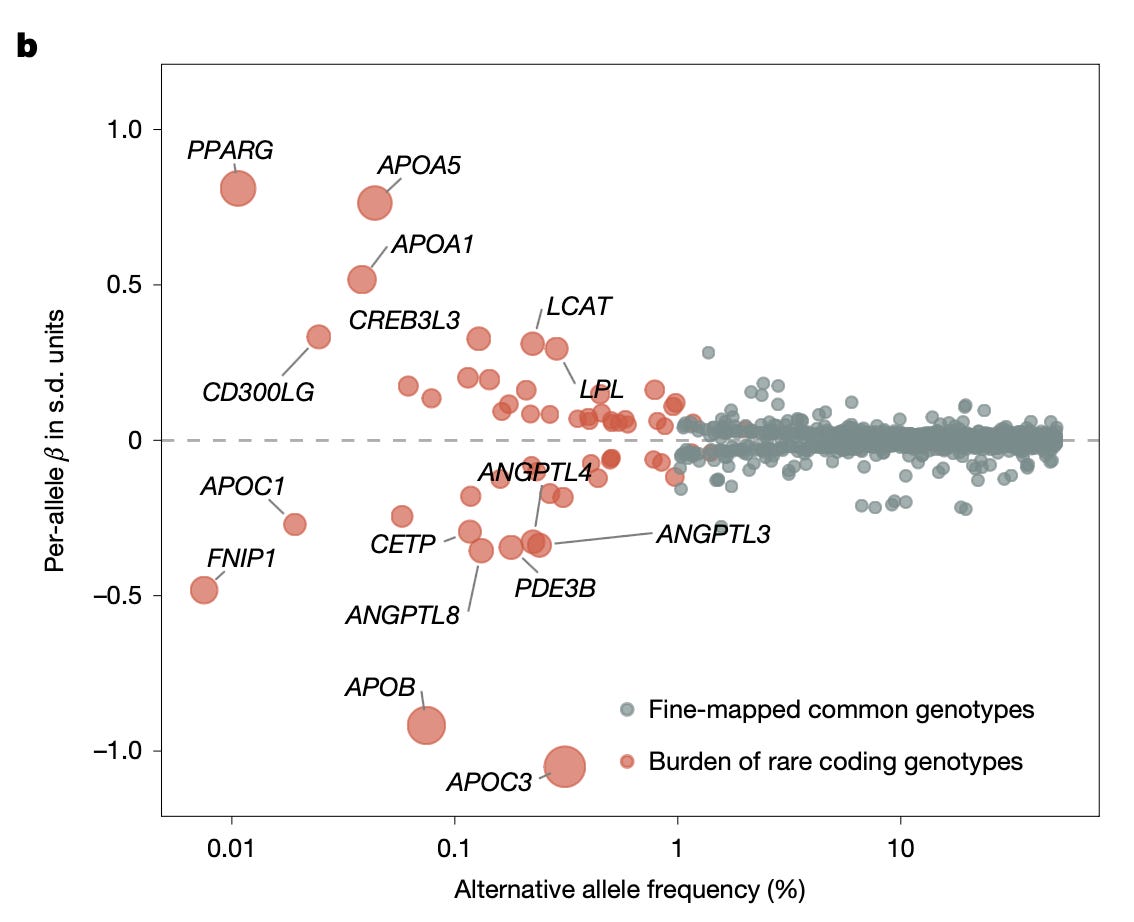
How the FNIP1 genetic signal relates to two sides of the ratio is a mirror image. It lowers the TG by 0.41 SD and raises the HDL by 0.41 SD. The paper scores every one of the 59 genes on how the signal divides between the two components, and FNIP1 lands at 0.5, a perfect split between TG and HDL.
That balance is why the ratio is the sharpest view of it. FNIP1 clears significance for TG alone and HDL alone, but the ratio gives the strongest signal of the three. Adjust for either and the other shrinks. The finding lives in the pair, not in either number.
The association is driven collectively by predicted loss of function variants (pLOFs) that break the gene in different ways. Individually the variants are extraordinarily rare, often found in only one or two individuals among the million studied, but together they reach a frequency that allows statistical testing with adequate power.
And before this paper, FNIP1 had never appeared in lipid genetics. Not for TG, not for HDL, not for the ratio. Search PubMed for FNIP1 alongside lipid terms and you get three papers: this one, and two studies in livestock.
A closer look at all the FNIP1 associations validates the protective signal and gives a picture that is not about how much fat the carriers have but rather how well their fat is stored. Their BMI is not meaningfully different. What differs is where the fat sits and what it is doing. The visceral to gluteofemoral fat ratio is lower on MRI, waist to hip ratio adjusted for BMI is lower, liver fat is strikingly lower, HbA1c is lower and apoB is lower. Same body weight, better placed fat, quieter liver and better glucose.
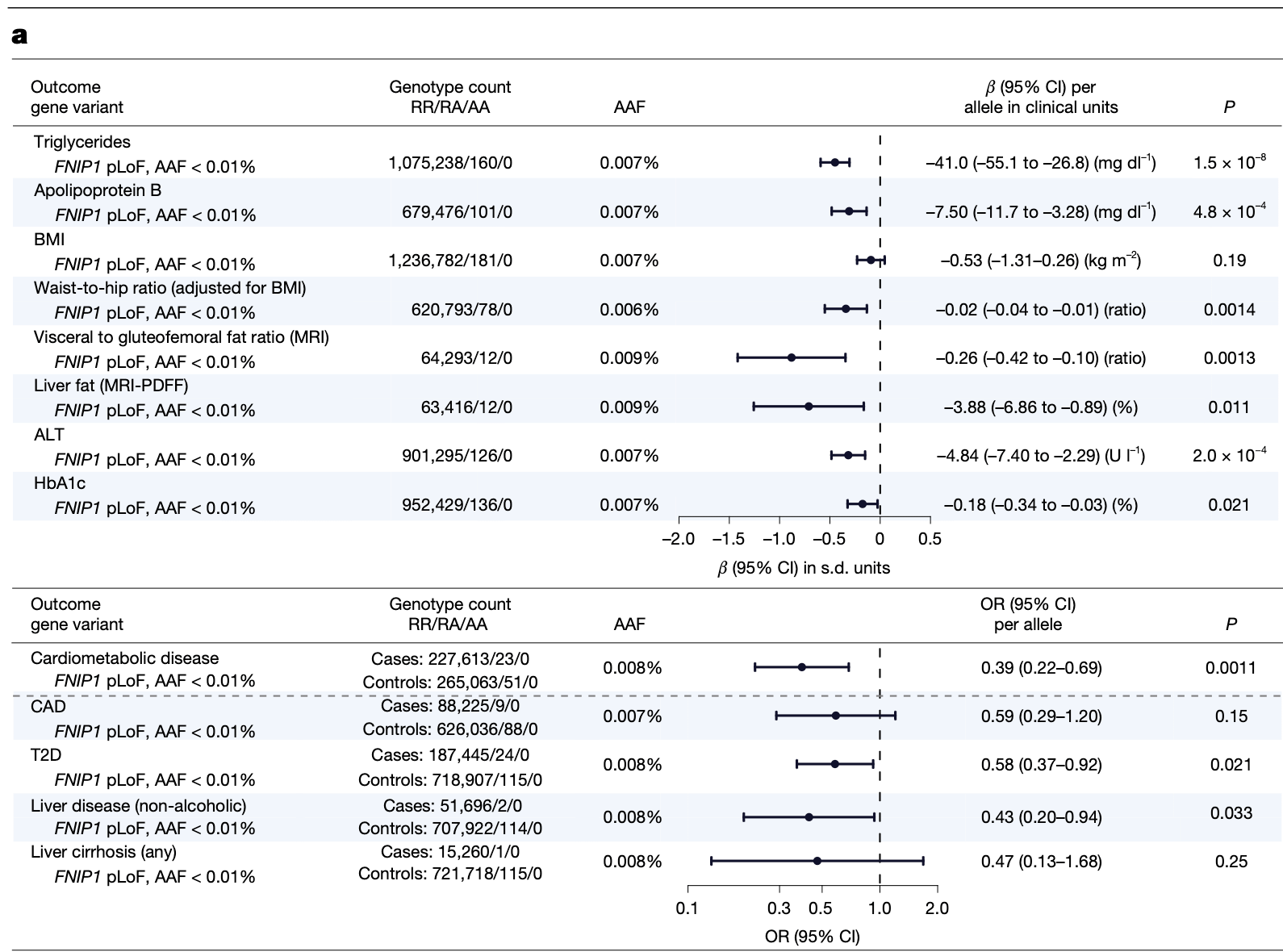
Then the disease outcomes. Across ~230k cases and ~260k controls, carriers had 60% lower odds of a composite cardiometabolic outcome (coronary artery disease, T2D, MASLD and cirrhosis), at an odds ratio of 0.39; T2D at 0.58 and MASLD at 0.43. Note, without the statistical power that a quantitative biomarker gave, these disease effects could never have reached genome-wide significance. It’s impossible to identify this gene purely from disease outcomes, at any sample size.
Genetic association so far showed partial loss is protective for cardiometabolic disease. What about complete loss? It causes a Mendelian syndrome characterized by immunodeficiency and hypertrophic cardiomyopathy. FNIP1, it turns out, is expressed not only in liver and adipose tissue, but also across the body including immune and cardiac cells that don’t tolerate complete loss of FNIP1. And this flags a safety signal.
So the authors went looking for these signals in the heterozygotes. A composite phenotype covering clinical features of the syndrome showed no association, confirming that the disease effects are recessive and might not be a concern in partial loss.
So, what does FNIP1 encode, and what does it have to do with the TG:HDL ratio? FNIP1 encodes folliculin-interacting protein 1. As the name tells you it doesn't work alone. It binds folliculin (gene: FLCN), and the complex sits downstream of AMPK holding two transcription factors TFEB and TFE3, which drive mitochondrial and lysosomal gene programmes. The folliculin complex acts as a brake that holds the downstream TFs on a leash not letting them inside the nucleus. Lose folliculin or its interacting protein, the TFs enter the nucleus, the cell builds more mitochondria and burns energy.
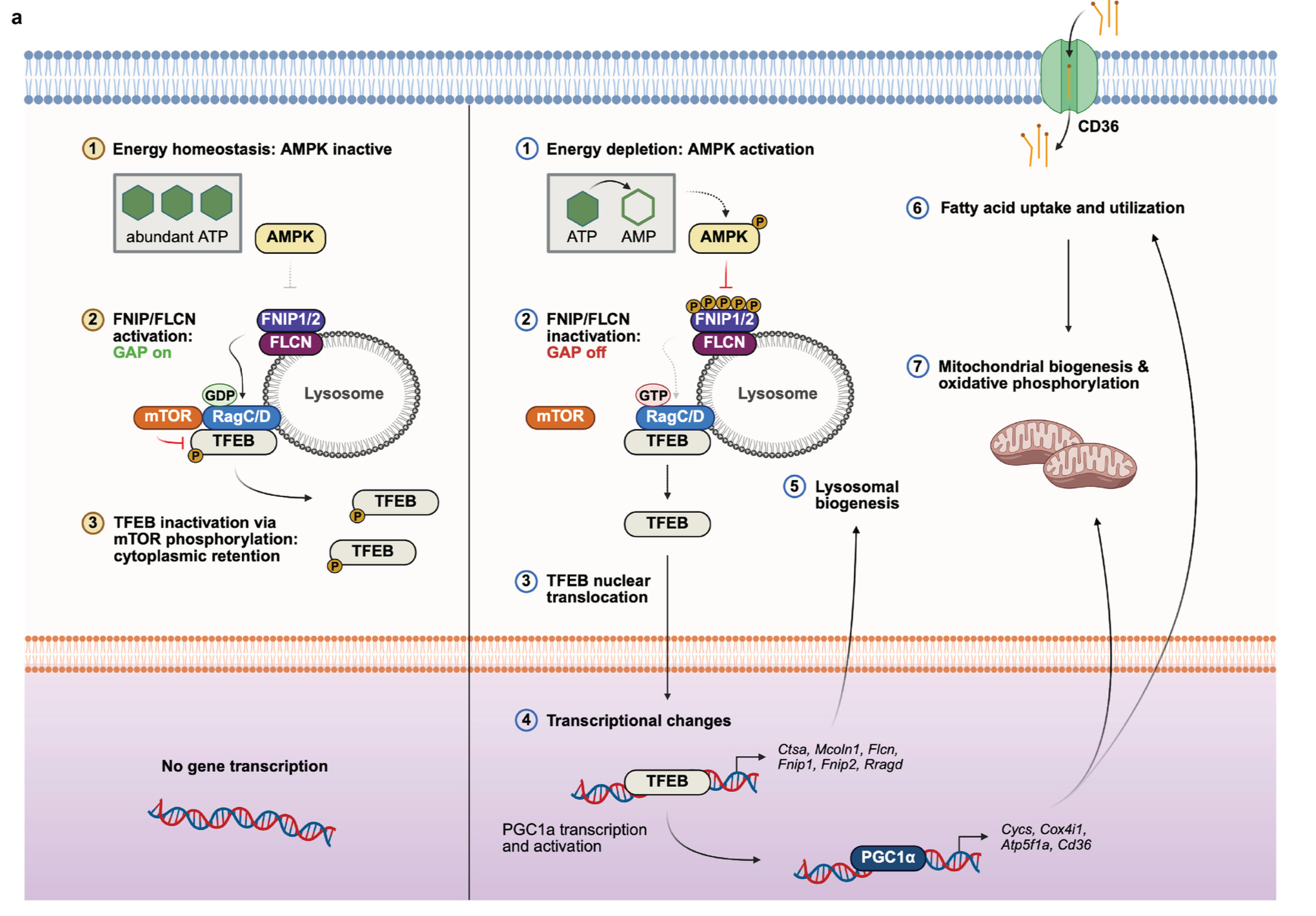
The genetics of FNIP1’s partner FLCN also align with biology: rare damaging FLCN variants move TG:HDL ratio in the protective direction, though at a weaker strength. Although both seem to show similar protective genetic effects, one wouldn’t target FLCN as, unlike FNIP1, FLCN mutations cause a dominant disease, Birt-Hogg-Dubé syndrome, characterized by pulmonary cysts, pneumothorax and predisposition to tumours, particularly of the kidney. In their dataset, the authors found carriers of FLCN pLOFs had an 18-fold higher risk of pneumothorax and 9-fold higher risk of kidney cancer. It’s interesting to note two proteins of the same complex, having same protective effect, show completely different safety profile. Clearly, FNIP1 is the target worth going after.
The authors did functional follow up using in vitro and mice experiments, which revealed something interesting.
In human liver cells, FNIP1 silencing worked as expected, activating lysosomal and lipid breakdown genes. Knock down FNIP1, brake comes off and cells start burning.
The mice are where it got interesting. Deleting Fnip1 in the liver did nothing. But deleting Flcn or Fnip1 and Fnip2 together protected the animals against weight and fat gain on high fat high fructose diet with proportionally more lean mass. So, the pathway behaved as expected in mice, but the exact target disagreed with humans. It appears in mice Fnip2 (the paralog of Fnip1) covers for Fnip1 causing a redundancy, which is not the case in humans, highlighting again the challenges of using mice to find drug targets.
Rest of the mouse phenotype is what you would want: better insulin tolerance, lower circulating insulin, less liver fat. And in adipose tissue, where folliculin pathway is untouched, the authors show activation of lipolysis and mitochondrial genes. It seems cutting the brake in liver alone is sufficient to drive the changes in adipose tissue too.
So, this is the part that makes drug companies like Regeneron invest in human genetics. A rare loss-of-function variant that protects people is the closest thing we have to a phase 1 trial. The carriers have lived their whole lives with one broken copy of FNIP1. What that resulted in is a better lipid profile, less liver fat, better glucose and around 60% lower odds of cardiometabolic disease.
How would you target FNIP1 that is expressed everywhere and sits inside the cell? FNIP1 is expressed in liver, and mouse work shows hitting this pathway only in the liver is enough to move the whole system. And the liver is a tissue well accessed by successful siRNA medicines. So, a liver specific knockdown of FNIP1 gene expression is the way to go.
What would such a drug do that current ones don’t? It would not be a weight loss drug. But it would be a drug that changes where the body puts its fat and how much of it the liver burns. This is a different lever from anything in the clinic now, and it came from reading a ratio that has been sitting on every lipid panel for forty years.
Original paper:
Hindy, Adam, et al. Nature 2026
https://www.nature.com/articles/s41586-026-10864-2
Really clean write-up, and pinning the signal to the TG:HDL ratio rather than a single lipid fraction is what makes it land.
What I keep coming back to is how much the loss-of-function direction does for you here: a protective knockout that lines up across the human exome data and the Fnip1/Flcn mouse models is a very different animal from the usual GWAS hit, where you are guessing at both direction and mechanism.
Very well explained.......